energy
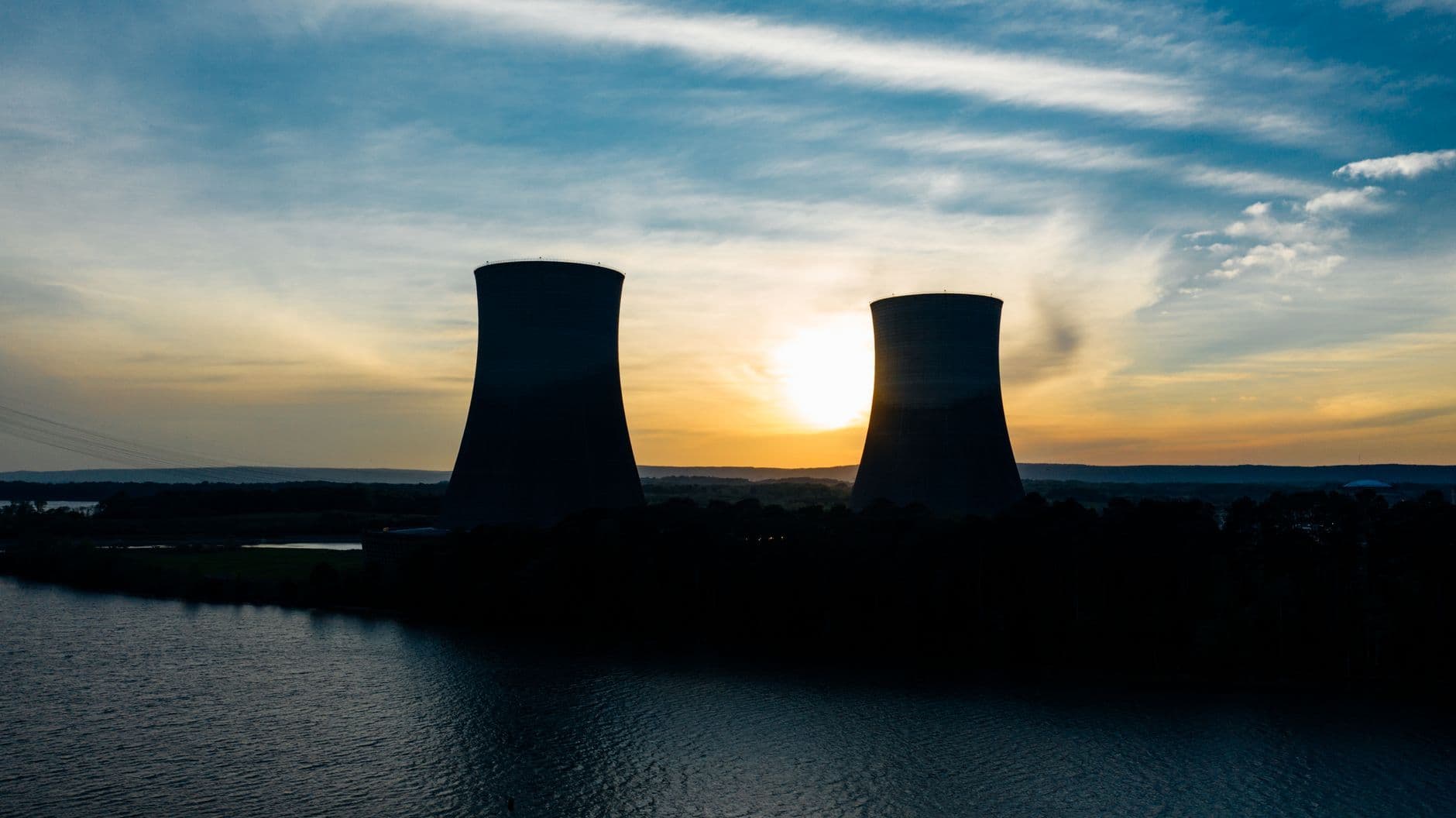
As nations worldwide seek to bolster energy security and meet net-zero emissions targets amid rising electricity demand, nuclear power is undergoing a significant resurgence. Recognized for its capacity to provide reliable, large-scale baseload power with minimal carbon emissions, nuclear energy is increasingly viewed as a critical component of the global energy transition.
In this context, Canada stands out as a global leader in civilian nuclear technology. At the center of this ecosystem is AtkinsRéalis, an engineering and project management firm that serves as the developer and commercial steward of CANDU (Canada Deuterium Uranium) reactor technology. During a recent visit to Vietnam, Dr. Sara Supa-Amornkul, Business Development Director at Candu Energy Inc., an AtkinsRéalis company, detailed the technology's competitive advantages and the potential for deep cooperation with Vietnam.
"As the global nuclear renaissance gains momentum, Canada and our company are looking to explore opportunities internationally, particularly in Southeast Asia, where we see tremendous potential for collaboration and nuclear industry development," said Dr. Supa-Amornkul. "Vietnam has always been one of the most important countries in the region. That is why I am here to explore opportunities and determine how Canadian nuclear technology can contribute to Vietnam’s nuclear energy development in this new era."
CANDU technology possesses several distinct features that set it apart in the global market. Its most significant advantage is its use of natural, unenriched uranium as fuel, a capability unique among commercial reactors.
"We are the only reactor technology in the world that uses natural uranium," Dr. Supa-Amornkul explained. "This gives countries greater energy independence because they do not need to rely on uranium enrichment services when it comes to fuel supply."
This fuel flexibility is a critical strategic benefit, as uranium enrichment facilities are operated by a limited number of countries. Dependence on these services can expose a nation to geopolitical and commercial supply risks. By using natural uranium, countries can mitigate these vulnerabilities.
Another key feature is the ability to refuel the reactor while it remains online, which eliminates the need for lengthy shutdowns. "CANDU reactors have one of the highest capacity factors in the industry—above 90 percent—because they can be refueled online without shutting down the reactor. We are the only technology that offers this capability," she noted.
Beyond electricity generation, CANDU reactors can also produce vital medical isotopes, such as Cobalt-60, used globally for cancer treatment and sterilizing medical equipment. "This means countries can achieve not only energy security but also greater medical security," Dr. Supa-Amornkul stated, highlighting that domestic production can prevent supply chain interruptions like those seen during the COVID-19 pandemic. Furthermore, the newest CANDU designs incorporate modular construction techniques, bringing the efficiencies of modular deployment to large-scale nuclear facilities.
AtkinsRéalis envisions a partnership with Vietnam that extends far beyond technology sales, emphasizing long-term workforce development and knowledge transfer to build a self-sustaining domestic nuclear industry.
Dr. Supa-Amornkul shared her personal journey to illustrate Canada's collaborative approach. "I come from Thailand. I was a Thai student who went to Canada to pursue my Master's degree and PhD. Today, I travel around the world representing Canadian nuclear technology," she said. "It did not matter that I was not born in Canada. I was given the opportunity to contribute and represent Canadian technology globally. This is what true collaboration looks like."
This philosophy underpins the company's commitment. "Canada and AtkinsRéalis are committed to helping Vietnam develop its workforce and build long-term domestic capabilities so that the country can successfully support and sustain its own nuclear industry for generations to come," she affirmed.
Recognizing that nuclear projects require substantial investment, Dr. Supa-Amornkul outlined a collaborative financial and implementation model. While the intellectual property for CANDU technology is owned by the Government of Canada, AtkinsRéalis holds the rights to develop and build the reactors.
"When we undertake international projects, we typically form consortia involving partners from multiple countries because these are large-scale projects that require broad collaboration," she said. This approach often involves the participation of export credit agencies from partner countries, which can provide support for project financing and risk mitigation.
Drawing on lessons from successful CANDU projects in Romania, South Korea, and China, she stressed the importance of investor confidence. "Through decades of experience around the world, CANDU technology has built a reputation for delivering projects on time and on budget," she noted. "This is extremely important for investors and lenders because projects that are completed as planned generally have lower financing risks and lower borrowing costs."
In a world marked by geopolitical uncertainty, energy independence has become a paramount concern for policymakers. Dr. Supa-Amornkul argued that CANDU technology offers a powerful solution to this challenge.
"Conflicts and geopolitical tensions can significantly affect energy prices and energy security," she observed. "As a result, every country wants greater control over its electricity supply and costs. This is where CANDU technology offers a unique advantage."
She proposed a strategy of technological diversification for Vietnam's nascent nuclear program. "If one project relies on enriched uranium, another project based on natural uranium technology could provide additional energy security and resilience," she advised. "From my perspective, this diversification would strengthen Vietnam’s long-term energy independence and reduce exposure to external supply risks."
Looking to the future of Canada-Vietnam cooperation, Dr. Supa-Amornkul emphasized the profound, long-term nature of a nuclear energy partnership.
"People often say that a nuclear project is like a marriage—it is a long-term commitment and a marathon rather than a sprint," she said. With refurbishment, a CANDU reactor can operate for close to 100 years, necessitating a partner that is reliable and trustworthy over many decades.
Revisiting her personal experience as a model for this relationship, she concluded, "I believe successful partnerships are built on mutual respect, equal opportunity, and trust. That is the kind of long-term relationship Canada hopes to build with Vietnam in the field of clean energy and nuclear technology."
Top 5 Vietnam business stories in your inbox every morning. Free, no spam.