energy
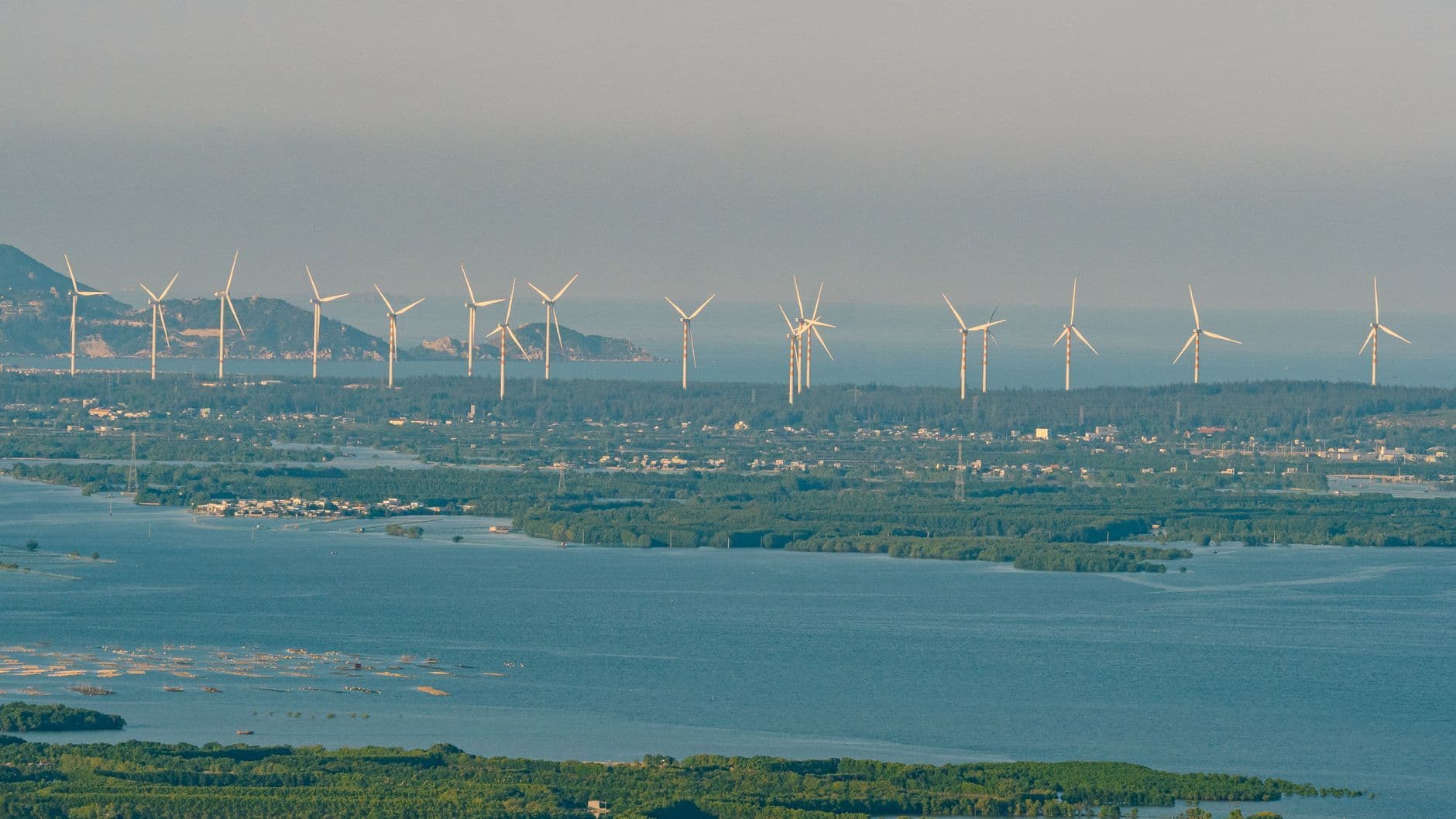
Vietnam has set ambitious targets to develop 26-38 GW of onshore and approximately 6 GW of offshore wind power by 2030 under its National Power Development Plan VIII (PDP8). This initiative is central to the nation's energy transition and its 2050 net-zero emissions commitment, while also creating significant opportunities to attract investment and bolster energy self-sufficiency.
Mr. Bui Vinh Thang, Vietnam Country Manager at the Global Wind Energy Council (GWEC), noted that the objectives outlined in PDP8 position Vietnam as a potential leader in wind power development within the region, excluding China and India. “Of course, the prerequisite is that we must realize the set objectives,” he added during the recent APAC Wind Energy Summit 2026 in Hanoi, organized by GWEC.
The government's commitment was recently reinforced by the Politburo's Resolution No. 70-NQ/TW, which outlines objectives and solutions for ensuring national energy security through 2030 with a vision to 2045, addressing urgent issues in the sector.
According to GWEC, Vietnam holds an estimated 600 GW of offshore wind power potential. A significant portion of this can be developed using fixed-foundation technology due to the country's relatively shallow continental shelf. This offers a competitive advantage over markets like South Korea, Japan, and Taiwan (China), which often require more expensive floating-foundation technology. For onshore wind, Mr. Thang stated that the 26-38 GW target by 2030 is ambitious but “entirely feasible” with a smooth policy framework, development of the domestic supply chain, and stronger links with foreign direct investment.
Given Vietnam’s double-digit electricity demand growth, wind power will play a particularly important role in the nation’s energy structure.
— Mr. Bui Vinh Thang, Vietnam Country Manager, Global Wind Energy Council (GWEC)
Mr. Alessandro Antonioli, Country Representative in Vietnam at Copenhagen Infrastructure Partners (CIP), affirmed Vietnam's competitive advantages, citing its favorable natural resources, including high wind speeds, stable wind quality, and a long coastline.
Domestic demand is another key driver. “A rapidly-growing economy like Vietnam needs a more stable, affordable, and sustainable energy source in the long term,” said Mr. Antonioli. “In particular, the trend of shifting manufacturing supply chains from Europe and the US to Vietnam is driving increasing demand for green energy.”
He noted that these factors present both challenges and opportunities, contingent on supportive policies, a clear legal framework, and a strategy to enhance domestic supply chain capacity. “Vietnam also has a considerable advantage due to its many experienced offshore oil and gas companies, creating an important foundation for the future development of offshore wind power,” he added.
This potential has attracted major industry players. Mr. Ngo Tien Dat, Country Manager of Suzlon, a leading Indian wind turbine supplier, described Vietnam as a “highly-promising market” in the Asia-Pacific. He affirmed that the country’s fast-growing economy and young workforce were key reasons Suzlon Energy chose Vietnam for its first regional hub in Southeast Asia.
After a period of rapid expansion driven by a Feed-in Tariff (FiT) mechanism, Vietnam’s wind power industry is entering a new phase, with high expectations from international investors. However, unlocking this potential requires more decisive government action on policies, pricing mechanisms, and the legal framework to build investor confidence.
Mr. Thang of GWEC, which has been active in Vietnam since 2018, has witnessed the industry's evolution. He identified the FiT mechanism issued in 2018 as the “biggest turning point” for the sector. While not a perfect policy, he said, it created a significant boost that attracted a strong flow of investment, resulting in the over 5.5 GW of onshore and nearshore wind power currently supplying the national grid.
However, the market decelerated after the FiT expired, with no clear successor mechanism in place from 2021 to early 2024. During this period, many investors adopted a wait-and-see approach due to the lack of a legal framework for the next development phase.
Global headwinds, including Russia-Ukraine tensions, high interest rates, lingering effects of the Covid-19 pandemic, and cost pressures, also created difficulties. Mr. Thang described this period as a “market correction” for the global wind industry, during which some investors withdrew from Vietnam to focus on other priorities.
Since late 2024, however, the market has shown positive signs as the government and the Ministry of Industry and Trade have introduced new policies to address industry challenges. “The GWEC greatly appreciates the efforts of the Vietnamese Government over the past two years to build a new policy framework for the wind power industry,” Mr. Thang said. “Though the current policy system is not yet perfect, it is relatively sufficient for the market to begin operating again. Several projects have been launched, with the offshore wind power sector making initial progress as regulatory authorities begin granting permits for project surveys. Investors closely following the market have seen the opportunity for a new development cycle.”
From an investor standpoint, Mr. Antonioli said CIP maintains strong confidence in the market's long-term potential. “Vietnam’s sustainable electricity demand remains a crucial foundation for investors to continue pursuing renewable energy projects,” he stated. “However, delays in policy planning over the past three years have eroded the confidence of many investors. There were high expectations for resolving bottlenecks in a series of renewable energy projects, but the process has been slower than expected. In addition, delayed payments to some renewable energy producers have significantly impacted market sentiment.”
Mr. Antonioli argued that Vietnam must now take more decisive action, including establishing a centralized coordination mechanism for the renewable energy sector and more strongly promoting tools like Direct Power Purchase Agreements (DPPAs) to accelerate projects.
Above all, he stressed the need for clarity and predictability in the legal framework. “Investors need to know clearly the licensing timeline, the electricity pricing mechanism, and especially the Power Purchase Agreement (PPA) template,” Mr. Antonioli emphasized. “The current PPA template still does not fully meet the necessary conditions for mobilizing international capital.”
If these bottlenecks are addressed, he concluded, Vietnam can enter a phase of larger-scale wind power development, which will be crucial for ensuring its energy security and advancing its green transition.
Top 5 Vietnam business stories in your inbox every morning. Free, no spam.