macro-economy
Vietnam’s economy sustained a solid recovery through the first five months of 2026, with notable strength in industrial production, public investment, foreign direct investment (FDI) inflows, and international trade. Beneath these headline figures, however, a series of concerns are emerging that demand careful monitoring: rising inflationary pressure, a growing trade deficit, sluggish domestic consumption, and an increasing reliance on the FDI sector. These developments signal that the economy is transitioning into a new phase where the primary challenge is shifting from accelerating growth to achieving more self-reliant and sustainable expansion.
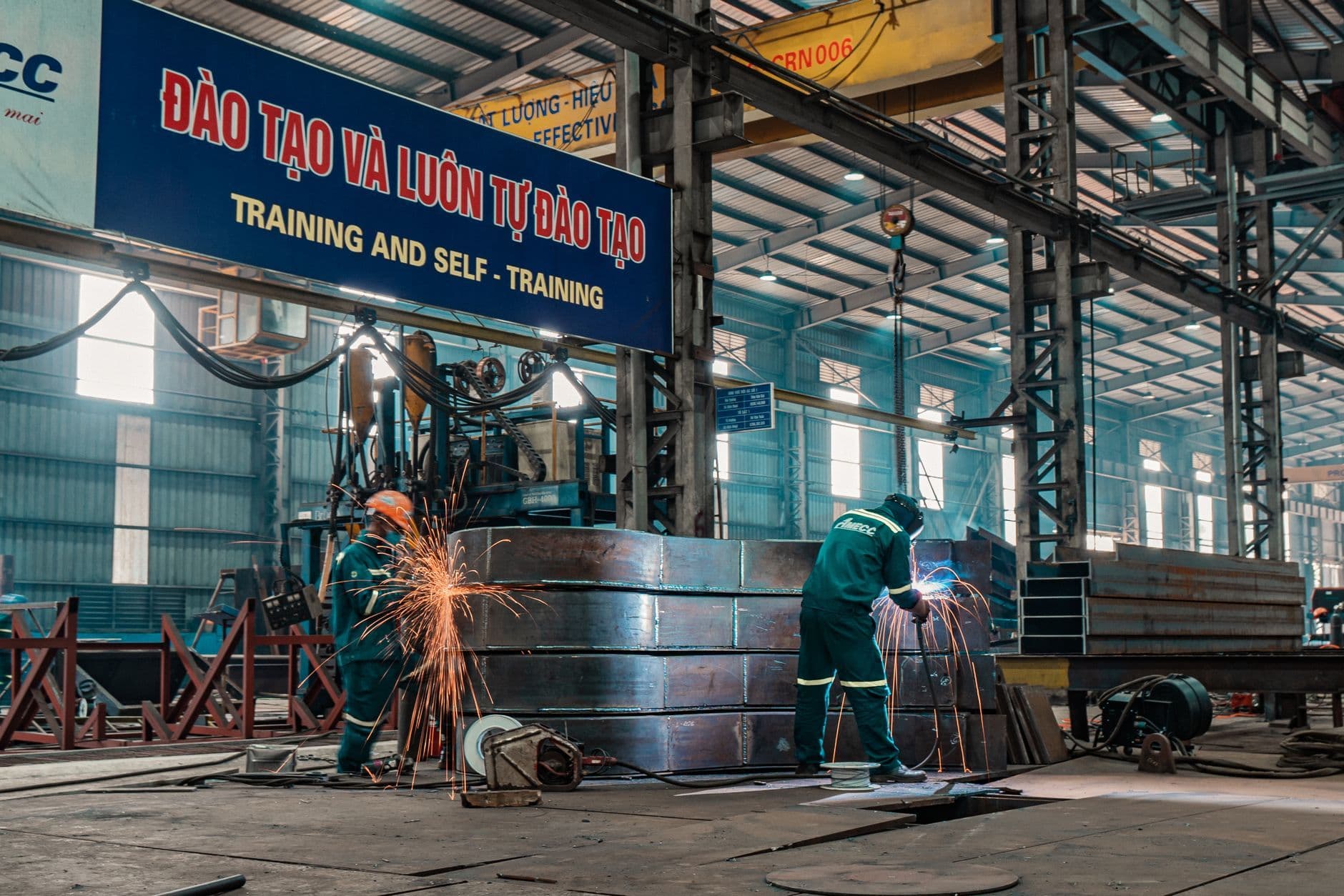
The Index of Industrial Production (IIP) expanded by 9.1 per cent year-on-year in the first five months, a rate 0.3 percentage points higher than the growth recorded in the same period of 2025 and marking the strongest five-month performance in four years. The manufacturing and processing sector continued to be the principal engine of growth, providing the largest contribution to industrial output, exports, and employment. This performance highlights the resilience and adaptability of Vietnam’s manufacturing base amid persistent uncertainty in the global economy.
The expansion also reflects the initial success of government policies designed to support businesses, expedite public investment, and enhance the business climate. While industrial production remains a cornerstone of economic growth, the quality of this recovery is under increasing pressure from rising input costs and external volatility.
To assess the sustainability of the recovery beyond headline output data, leading indicators such as new orders and business sentiment offer a more nuanced view. The Manufacturing Purchasing Managers’ Index (PMI) for May rose to 52.8 points from 50.5 in April, signaling a strengthening of the sector. Output expanded for the 13th consecutive month, with growth accelerating markedly from March and April. New export orders also returned to growth after contracting for two months, while purchasing activity and inventories of raw materials saw substantial increases.
These positive signals, however, warrant a cautious interpretation. The surge in orders and purchasing in May was not driven solely by stronger aggregate demand. A significant portion of the increase was attributable to businesses hedging against potential supply chain disruptions linked to the ongoing conflict in the Middle East. Many firms proactively built up inventories of raw materials and finished goods to insulate themselves from future price shocks and supply shortages. Consequently, the current growth momentum appears to be fueled more by risk mitigation strategies than by a fundamental improvement in market demand.
More critically, input costs rose for the fourth consecutive month, reaching their fastest pace of increase since April 2011. Escalating prices for imported materials, fuel, and logistics services compelled many manufacturers to raise their selling prices. This trend not only erodes profitability and competitiveness but also amplifies inflationary pressures throughout the wider economy. While the PMI data confirms that manufacturing activity is recovering, the momentum is largely precautionary. The sector remains on a growth trajectory, but it is navigating significant cost pressures.
The health of an economy is also reflected in the ability of businesses to enter, survive, and grow. In this regard, data on business formation and market exits over the first five months provides further insight.
Vietnam registered 94,800 newly-established enterprises during the period, a 42.1 per cent year-on-year increase. When combined with the nearly 47,800 businesses that resumed operations following a temporary suspension, the total number of market entrants reached 142,600. This is a positive indicator, suggesting a significant rebound in business confidence compared to the previous year.
However, a closer look reveals that 74.47 per cent of these new firms were concentrated in the services sector, while the growth in new industrial and manufacturing enterprises was modest. The average newly-established enterprise registered only 4.5 employees and had an average charter capital of VND11.2 billion ($431,000). These figures indicate that while the number of new businesses is climbing, their scale remains small and their contribution to new productive capacity is limited. The majority of new ventures are focused on trade and services rather than on expanding the nation’s manufacturing base.
Concurrently, 78,800 businesses suspended their operations, more than 31,400 ceased operations pending dissolution, and over 19,000 completed dissolution procedures. In total, 129,200 enterprises exited the market, a figure equivalent to 90.6 per cent of the number of new entrants. This high churn rate underscores the persistent challenges in the business environment, particularly for small and medium-sized enterprises (SMEs). While more businesses are entering the market, their resilience and quality remain significant concerns.
For an open economy like Vietnam’s, corporate performance is intrinsically linked to international market dynamics, making trade data a crucial barometer of competitiveness and economic health. Vietnam’s total goods trade turnover reached $445.12 billion in the first five months of 2026, an increase of 25 per cent year-on-year. Exports grew by 19.5 per cent to $215.66 billion, but imports surged by 30.8 per cent to $229.46 billion, resulting in a trade deficit of $13.8 billion.
The deficit widened notably in May, reaching $5.21 billion, up from $3.99 billion in April. This trend suggests that many businesses have accelerated imports of materials and goods as a precautionary measure against supply chain disruptions and price volatility stemming from the conflict in the Middle East. While higher imports can help firms manage risk and sustain production, they also underscore the manufacturing sector’s significant dependence on imported inputs.
Another prominent feature of the trade data is the continued dominance of the FDI sector in exports. Of the $215.66 billion in total exports, FDI enterprises accounted for $172.16 billion, an increase of 24.7 per cent, representing 79.8 per cent of the total. In contrast, the domestic sector generated only $43.5 billion in exports, a modest increase of 2.5 per cent, accounting for just 20.2 per cent of the total. This widening gap highlights the limited integration of Vietnamese enterprises into global value chains. While overall exports are expanding rapidly, the domestic sector’s export capacity is failing to keep pace with the growth of FDI-led trade.
FDI attraction was another bright spot in the first five months of 2026. Yet the impressive growth figures mask a more fundamental question: Is Vietnam strengthening its internal economic capacity, or is it becoming relatively weaker?
During the period, 1,576 new FDI projects were licensed with a total registered capital of $14.84 billion, more than double the level recorded a year earlier. Disbursed FDI reached $9.75 billion, a 9.6 per cent increase that marked the highest five-month growth rate in five years.
However, the composition of these FDI inflows requires close scrutiny. Of the total registered FDI, $4.19 billion came from capital contributions and share acquisitions, a 46.7 per cent year-on-year increase. In May alone, such transactions amounted to $1.68 billion, representing over 40 per cent of the five-month total. Most significantly, foreign investors completed 828 acquisitions of stakes in domestic companies without increasing charter capital, with a combined value of $3.62 billion.
This indicates that a substantial portion of FDI inflows is not being directed toward creating new production capacity or jobs. Instead, ownership of existing domestic assets is being transferred from local to foreign investors. From a market standpoint, such transactions are a normal feature of an open economy. From a long-term development perspective, however, they raise two concerns. First, they suggest that many domestic enterprises may be grappling with capital shortages, technology gaps, and competitive pressures, compelling them to sell equity to foreign partners. Second, if this trend continues, Vietnam risks becoming increasingly dependent on the FDI sector, which could potentially undermine its economic autonomy. The issue is not the volume of FDI, but the growing proportion of investment directed at acquiring existing assets rather than creating new productive capacity.
Total retail sales of goods and consumer service revenues rose by just 6.1 per cent during the first five months of 2026. This was below the 7.2 per cent growth rate from the same period last year and represented a slowdown from the growth seen in the first four months of the year. This deceleration occurred even as Vietnam welcomed a record 10.6 million international visitors, a 14.9 per cent increase. Without the significant contribution from international tourism, underlying household demand would appear even weaker.
The data suggests that household incomes have not improved enough to counteract the impact of rising consumer prices. Persistent inflationary pressures are encouraging more cautious spending behavior among consumers. The economy cannot achieve sustainable growth if household consumption recovers more slowly than production and investment. Weak consumer demand reflects not only modest income growth but also the increasingly tangible effects of inflation. With business input costs continuing to climb and global energy prices remaining high, inflation has emerged as one of the most pressing macroeconomic concerns.
The Consumer Price Index (CPI) rose 5.6 per cent year-on-year in May and 4.31 per cent over the first five months. Core inflation, which excludes volatile items, increased by 4.04 per cent. These figures are relatively high for an economy aiming to maintain macroeconomic stability while pursuing double-digit growth.
The current inflation is predominantly cost-push in nature, driven by higher raw material prices, rising logistics costs, exchange rate pressures, and elevated global energy prices. According to the World Bank’s baseline scenario, which assumes the most severe disruptions ease and shipping through the Strait of Hormuz gradually returns to near pre-conflict levels by year-end, Brent crude oil prices are projected to average $86 a barrel in 2026. This would be a 24.6 per cent increase from the $69 per barrel average in 2025 and could, by itself, add approximately 1.1 percentage points to the CPI.
At the same time, expanded public investment and planned adjustments to State-administered prices for certain goods and services could exert additional upward pressure on prices. Inflation is no longer a latent risk but an active constraint on growth and macroeconomic stability.
While many economic indicators, viewed in isolation, point to an encouraging performance, a consolidated analysis of production, business activity, trade, investment, consumption, and inflation reveals that new constraints on growth are becoming more apparent. Rising inflation, weak domestic demand, a widening trade deficit, the fragility of domestic enterprises, and a growing dependence on the FDI sector are creating new pressures.
These risks are not isolated; they are increasingly interconnected and self-reinforcing. Higher inflation erodes purchasing power, weaker demand constrains business expansion, and as domestic firms struggle, the FDI sector’s role in driving growth becomes even more pronounced. The greatest risk today is not slower growth, but a pattern of growth that is increasingly dependent on external factors and is therefore less sustainable.
Recognizing these constraints is not a cause for pessimism but a necessary step toward clarifying policy priorities as Vietnam navigates a period of overlapping challenges. Under current conditions, the primary objective for macroeconomic management should be to control inflation and safeguard stability. Simultaneously, Vietnam must continue to pursue institutional reforms, reduce compliance burdens, and lower logistics and input costs for businesses. Growth support policies should be more sharply focused on strengthening domestic enterprises, particularly in the manufacturing and technology sectors.
Regarding FDI, the goal should shift from simply attracting more capital to attracting higher-quality investment that creates new productive capacity, facilitates technology transfer, and strengthens linkages with domestic firms. At this juncture, the most critical task is not merely to accelerate growth, but to protect the quality of that growth. These measures will be most effective if implemented in a consistent, comprehensive, and timely manner. More importantly, they represent not just short-term responses to immediate challenges but essential steps toward reinforcing the economy’s long-term foundations.
The results from the first five months of 2026 show that Vietnam’s economy remains resilient and continues to recover. Yet new pressures are materializing more rapidly than anticipated. Looking beyond this year, the greatest risk may not be the pace of growth itself, but its quality, autonomy, and sustainability. If domestic enterprises are not strengthened, and if growth continues to rely excessively on exports and investment from the FDI sector, the gap between the economy’s scale and its internal capacity will continue to widen.
Vietnam’s strategic objective in the coming years should therefore extend beyond achieving faster growth. It must focus on building a more resilient economy, strengthening self-reliance, and enhancing the capacity of domestic enterprises to generate higher value-added output. In the short term, macroeconomic stability and inflation control must remain the highest priorities. In the long term, however, the strength of its domestic enterprises will determine the nation’s economic resilience and global standing. High growth is important, but growth built on strong domestic foundations is the true basis for sustainable national development.
() Dr. Nguyen Bich Lam is the former Director General of the General Statistics Office.*
Top 5 Vietnam business stories in your inbox every morning. Free, no spam.