infrastructure
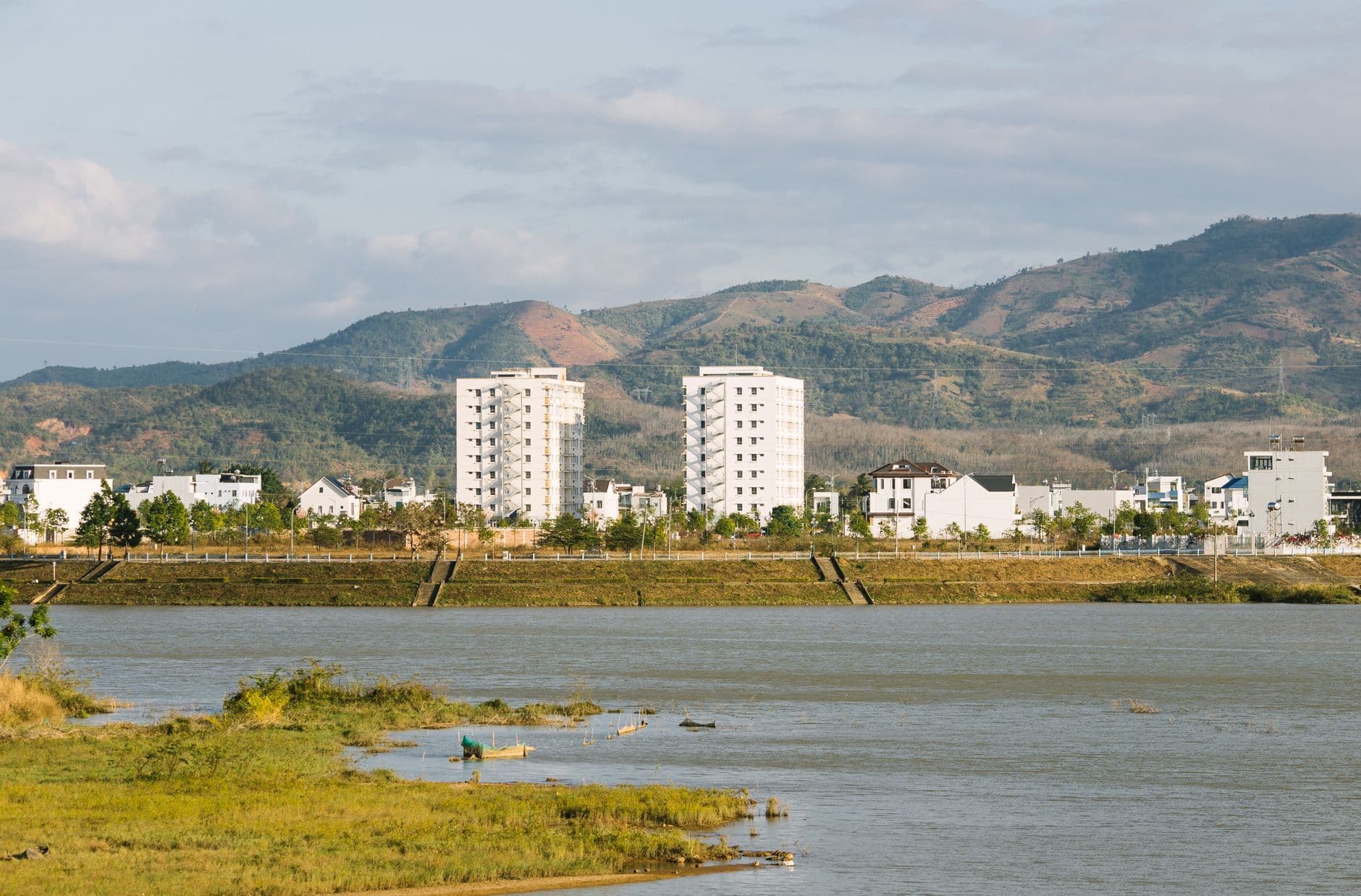
The south-central highland province of Dak Lak is preparing to host a major investment promotion conference on June 26-27, where it will present a portfolio of nearly 220 projects valued at approximately $30.35 billion. The event, aimed at attracting domestic and international capital, is a cornerstone of the province's strategy to accelerate its socioeconomic development and redefine its economic landscape.
Provincial authorities anticipate up to 1,000 participants, including investors, economic experts, and government officials. The conference agenda features a series of side events, such as groundbreaking ceremonies for key projects, the Vietnam Private Economic Forum, and specialized workshops on industrial cluster development, digital transformation, and high-tech agriculture.
The comprehensive list of projects seeking investment covers a wide range of sectors. It includes 47 renewable energy ventures; 35 initiatives in industrial, seaport, and logistics infrastructure; and 45 projects spanning agriculture, processing industries, and trade and services. Further opportunities are available in urban development, tourism, healthcare, education, and information technology.
Officials in Dak Lak view the conference as a pivotal moment, particularly following a revised provincial plan that incorporates the merger of Dak Lak and Phu Yen provinces and establishes a new long-term development vision.
Cao Thi Hoa An, Standing Deputy Secretary of the Dak Lak Party Committee and Chairwoman of the Dak Lak People’s Council, said the adjusted plan aims to redefine development viewpoints and set key socioeconomic tasks for the period leading up to 2030 and beyond.
According to An, the province aims to become a center for green economic development, logistics, healthcare, education, tourism, and science and technology by 2030. “By 2050, Dak Lak strives to become a moderately developed province in the country, with a modern economy, a rational structure, and green growth,” she stated.
An reaffirmed that the strategy will establish Dak Lak as a key development hub for the Central Highlands and a critical link to the South-central Coast region and national economic corridors. The plan designates the province as a major center for agricultural production, processing, and logistics. It prioritizes the growth of processing industries, renewable energy, trade, and tourism to build an economy oriented towards modern industry and services. Agriculture is slated for ecological development, incorporating high technology, value chain integration, and climate change adaptation, alongside the sustainable management of forest, land, and water resources.
Luong Nguyen Minh Triet, Secretary of the Dak Lak Party Committee, outlined an urban development strategy based on a central-satellite model. Buon Ma Thuot is positioned as the core urban center of the Central Highlands sub-region, with the Tuy Hoa area serving as the eastern coastal hub.
“Dak Lak province has set out three breakthroughs for development: focusing on the development of sci-tech and innovation; promoting administrative reform; and developing synchronous and modern digital infrastructure,” Triet said. He added that the province is also concentrating on workforce development and refining institutional mechanisms to improve government efficiency.
This provincial strategy aligns with directives issued earlier this year by Party General Secretary and State President To Lam, who called for a fundamental shift in thinking from simple area management to the creation of a strategic development space. He emphasized that Dak Lak must leverage its role as a connector between the Central Highlands, the coast, border regions, and national economic corridors, urging planners to move beyond fragmented, localized thinking.
“Dak Lak needs to reorganise its development space, with strategic infrastructure as the pillar,” Lam stressed. “Transportation, logistics, energy, and digital infrastructure must become tools for organising economic flows, value chains, and national defence and security; forming new growth poles and development belts.”
The province's strategic location and ambitious development plans have already captured the attention of major corporations, including T&T Group, which has proposed significant investments in local energy and real estate projects.
In the western part of the province, T&T Group has put forward a proposal for the East Buon Ma Thuot Mixed-Use Urban Area, located in the Tan Lap, Buon Ma Thuot, and Ea Kao wards. The $1.7 billion project is planned to be implemented in three phases between 2027 and 2034.
In the eastern region, the conglomerate has proposed to study an investment in the Eastern Urban Area along the National Highway 1 bypass in Tuy Hoa and Binh Kien wards. This project covers over 300 hectares with an estimated total investment of $808 million, with an implementation timeline set for before 2035.
In the energy sector, T&T has expressed its intent to develop wind and solar power projects, aiming to bring approximately 5GW of capacity online before the end of the decade. This aligns with the province’s broader goal to attract a total investment capacity of around 15GW by 2035 to capitalize on its natural advantages and support economic growth.
Party Secretary Triet emphasized the province's commitment to creating a favorable investment climate. “Dak Lak creates the conditions for capable and reputable investors to explore and implement projects that are consistent with the local planning and development orientation,” he said, noting that large-scale energy and real estate projects are expected to create significant growth momentum.
He affirmed his personal commitment to overseeing the process, stating he will “directly monitor and regularly urge the relevant authorities to promptly resolve difficulties for investors, ensuring that projects achieve the fastest and highest efficiency in the area.”
Dak Lak’s provincial plan includes 125 energy ventures with a total potential capacity exceeding 14,000MW. Of these, 91 renewable energy projects are slated for development before 2030, with another 34 planned for the 2031-2035 period. To date, only 15 projects have received approval, with wind power accounting for 12 of them.
Top 5 Vietnam business stories in your inbox every morning. Free, no spam.